
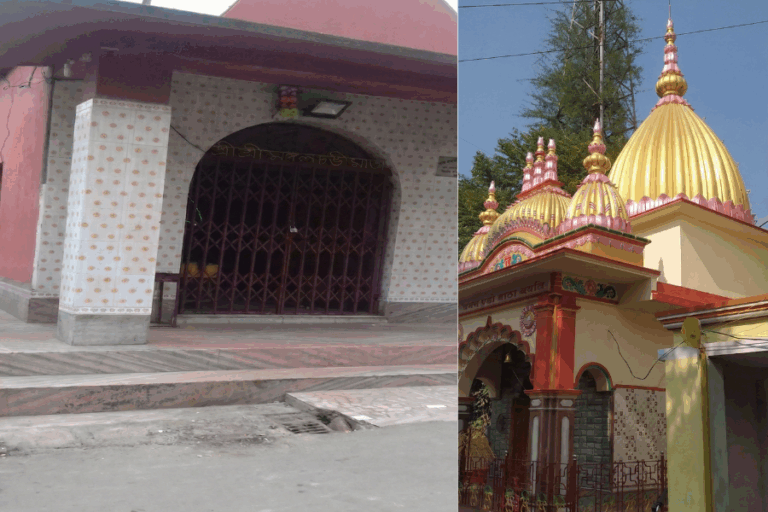

Temple in Nabadwip dedicated to Goddess Mangal Chandi. Linked to the Shakti Peetha belief where Sati’s left elbow fell. Deity
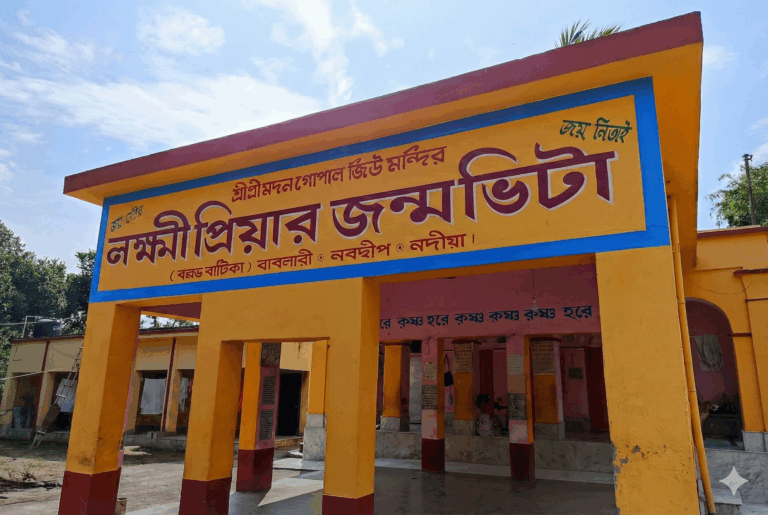
Lakshmipriya Devi was born in Nabadwip, inside a brahmana locality linked with scriptural learning. Her father, Vallabha Acharya, maintained his
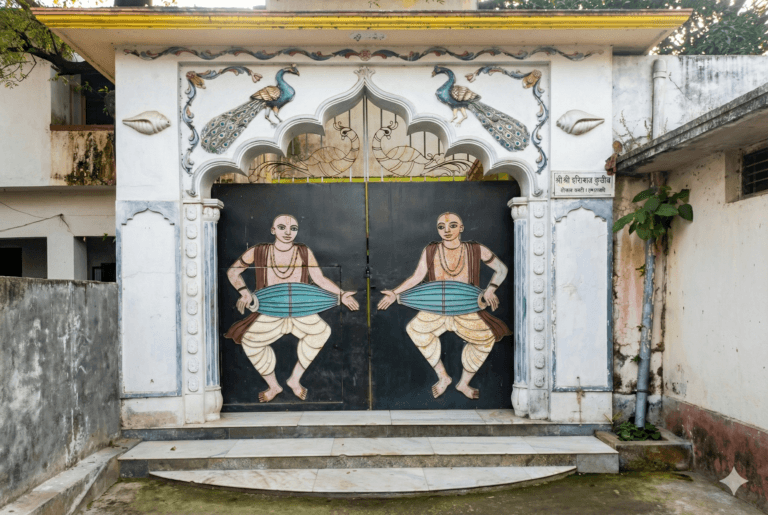
Located between main ferry ghat and Srivas Angan. Linked with Gaudiya Vaishnavism tradition. Residence of Haridas Das Babaji. Center for
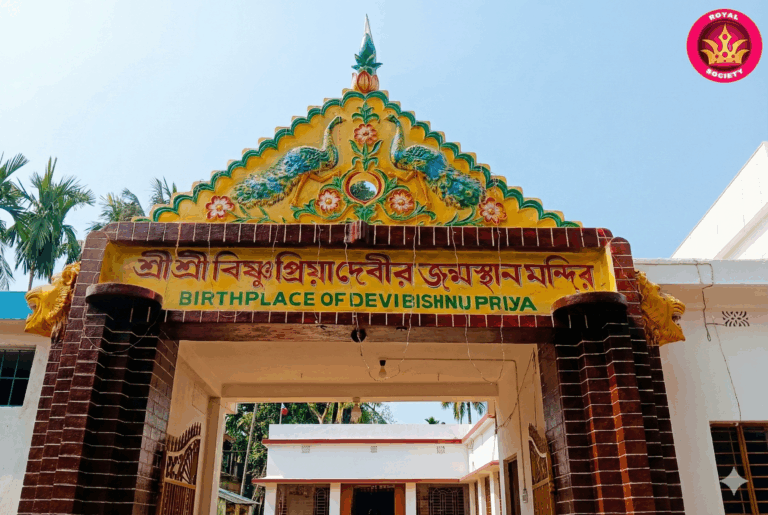
Birthplace in Malancha Para, Nabadwip. Birth in 16th century. Listed by West Bengal Heritage Commission. Temple for Sri Gour and
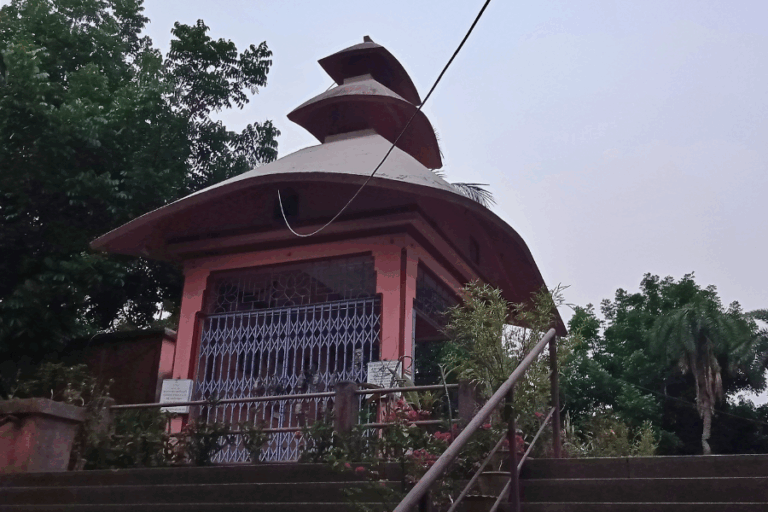
The Shree Aurobindo Ashram, also known as the Nabadwip Bangabani Ashram, is located in Pratapnagar, Nabadwip, and is notable for
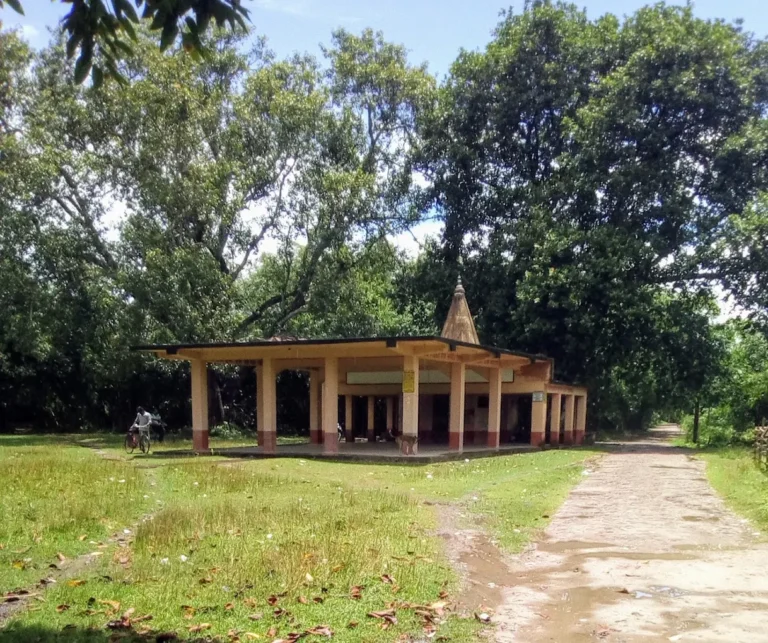
Brihadrath arrived in Navadvipa long after Lakshman Sena’s rule. He set a pot in Bablari for Kalika sadhana. Siddheshwari Kali
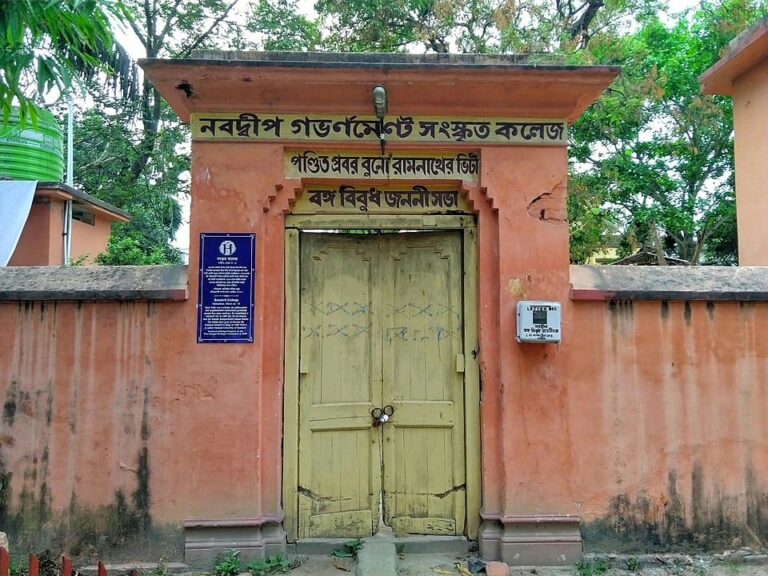

Ramnath Tarkasiddhanta, also known as Buno Ramnath, was a notable logician, scholar, and ideal teacher in Nabadwip during the eighteenth
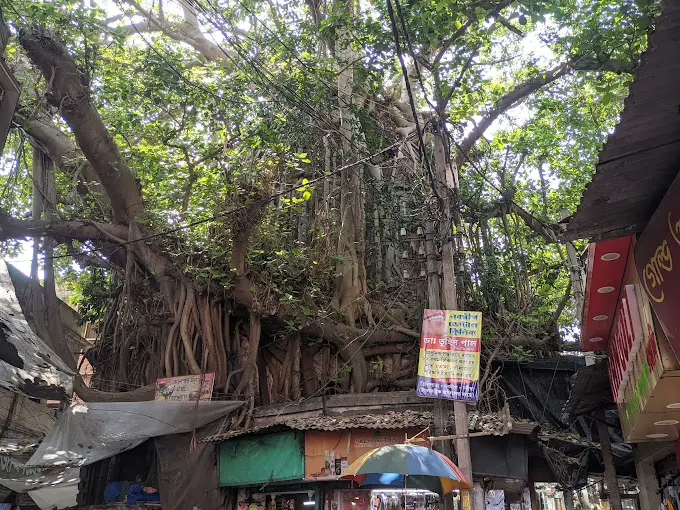
Poramatala is one of the sacred religious centers in Navadwip. This area is covered by a massive banyan tree, which
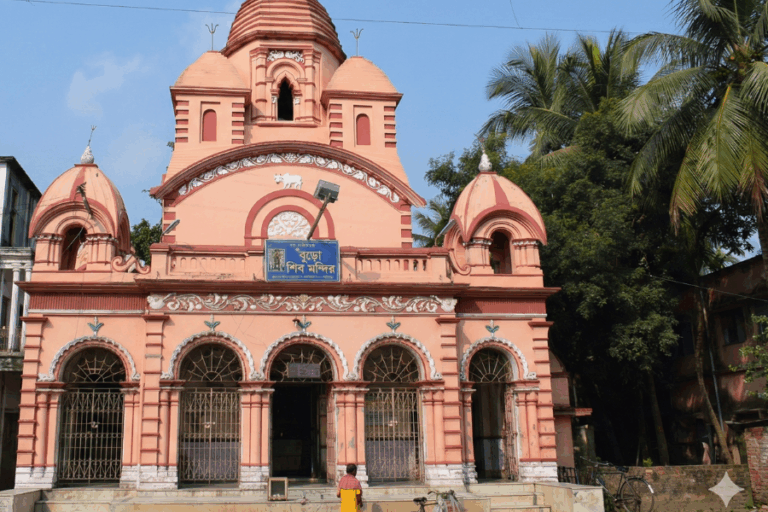
Temple at Buroshib, Built in Navaratna style. Mentioned in Gauracharita Chintamani and Tirthamangal (1770 CE). Present structure from 1907 CE.
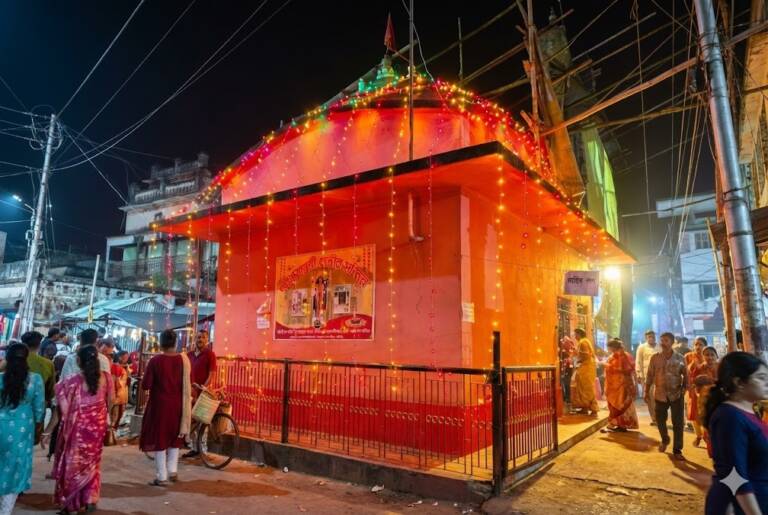
Located in Nabadwip, Nadia. Tradition nearly 500 years old. Dakshina-form Kali worshipped with Vaishnava rules. No sacrifice despite Panchamundi asana.

Founded in 1912 (1318 B.S.) at Nabadwip. Founder: Radharamana Charan Das Dev (Barha Baba). Based on devotion, service, and welfare.
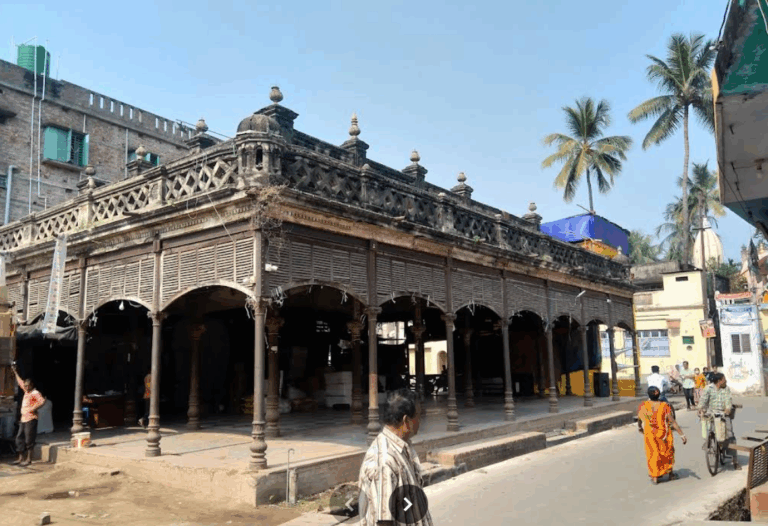
Boro Akhra, also known as Madan Gopal Mandir Bora Akhra, is a significant religious site in Nabadwip, West Bengal. It
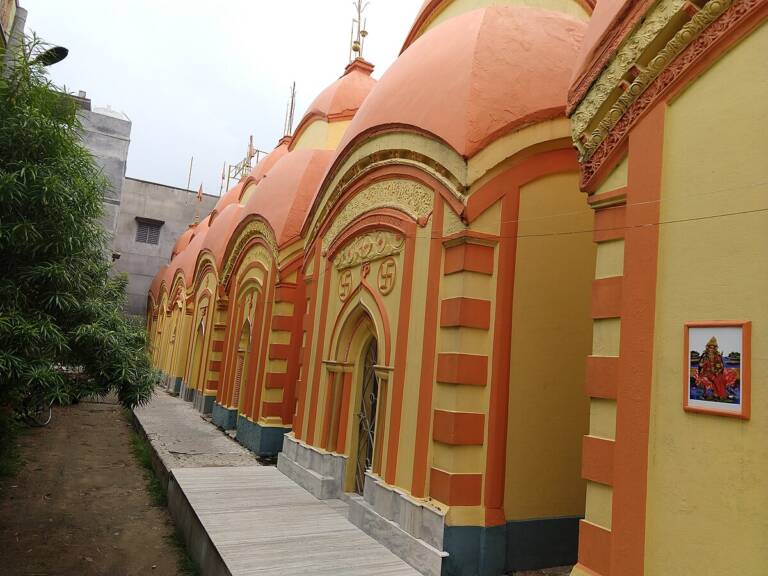
Built in 1835 by Gurudas Das, a copper merchant. Located on the banks of the Bhagirathi River in Nabadwip. Designed
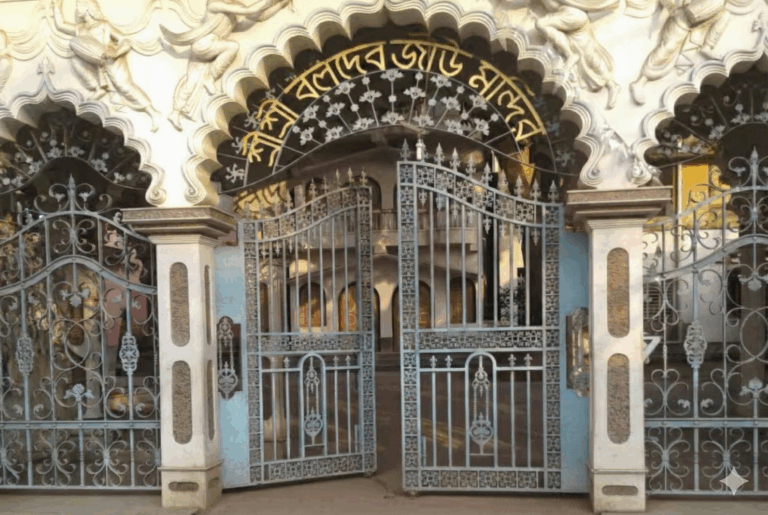
Sri Baldev Jew Temple is a revered Hindu shrine in Nabadwip dedicated to Radha-Madhav. It is located on Gantala Road,
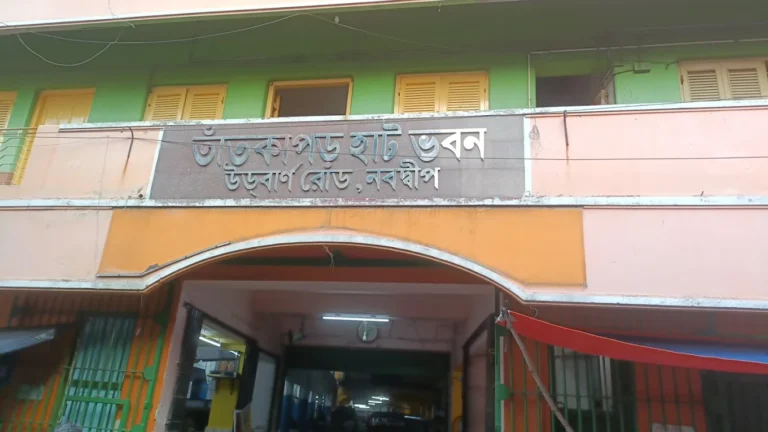
Tant Kapoor Hat began as a weaving market connected to Nabadwip’s 15th-century textile activity. Shantipur’s Tant saree tradition influenced the
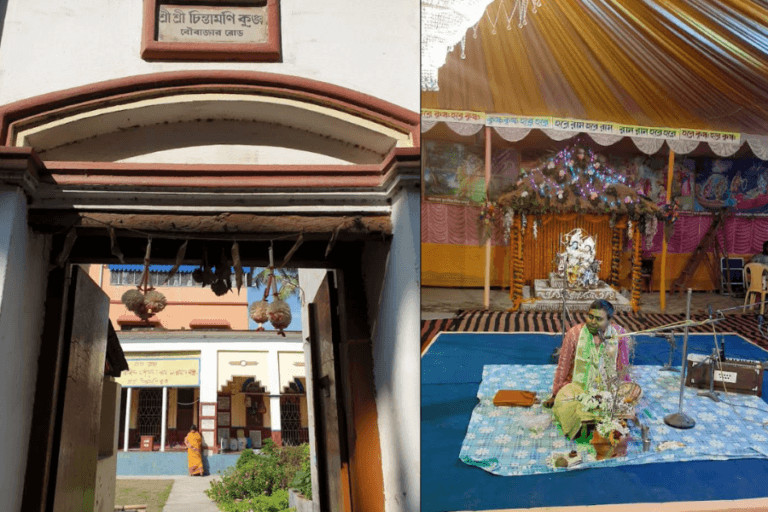
Sri Sri Chintamani Kunj is associated with Nabadwip. Nabadwip is the birthplace of Sri Chaitanya Mahaprabhu. Chaitanya Mahaprabhu is worshipped
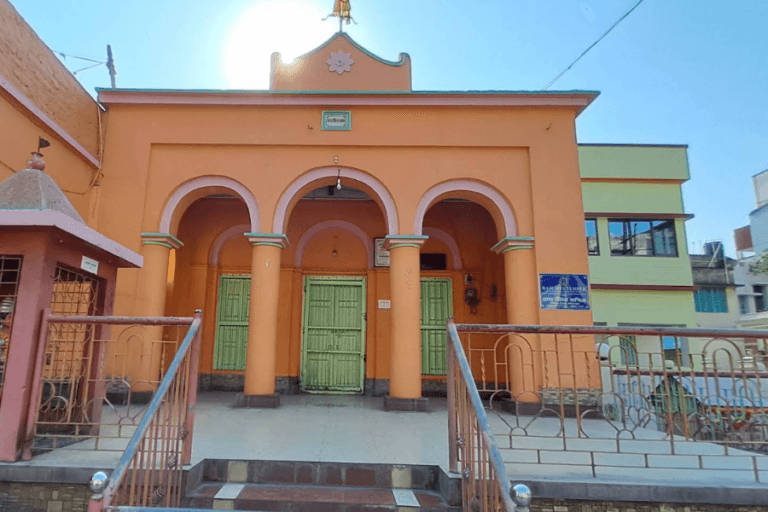
Ramsita Mandir, dedicated to Lord Ram and Goddess Sita. Ramsita Para, named after the temple. Famous for Ras Purnima festival
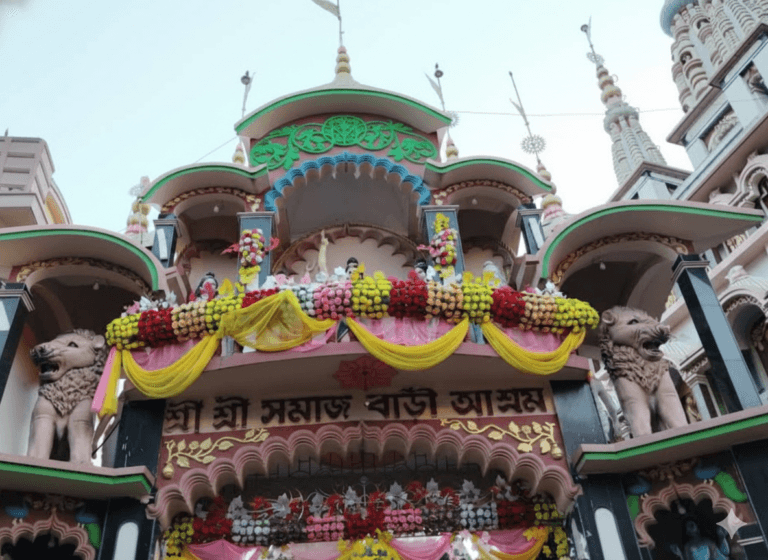
Samajbari is the ashram and samadhi of Sri Radharaman Charan Das Dev in Nabadwip. Established by Charan Das Babaji. Contains
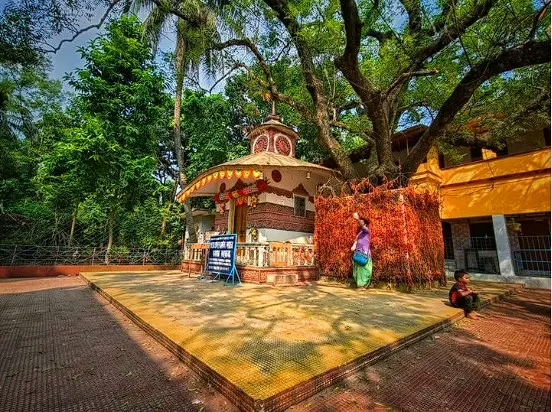
Neemai Janmasthan Assram (জন্মস্থান আশ্রম) is the actual birthplace of Mahaprabhu Sri Sri Gouranga, later known as Chaitanya Mahaprabhu according
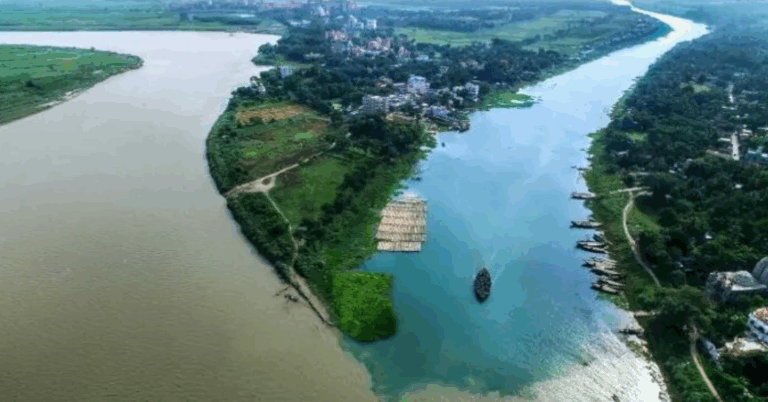
The phrase “Mori Ganga” refers locally to the Jalangi River, not the main Ganges. It is commonly used to describe
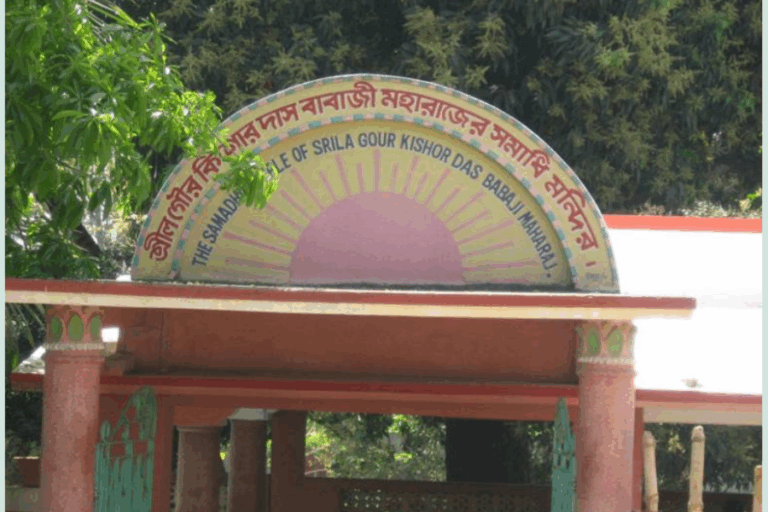
Born in 1838; contemporary of Srila Bhaktivinoda Thakur and guru of Srila Bhaktisiddhanta Sarasvati Thakur. Lived with strict renunciation and
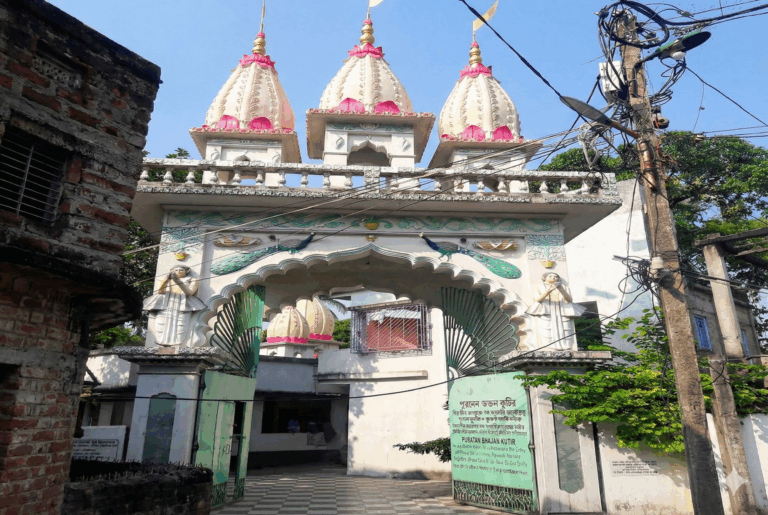
Samadhi Mandir in Nabadwip holds the samadhi and bhajana-kutira of Srila Jagannatha dasa Babaji. Born around 1750 in Mymensingh district
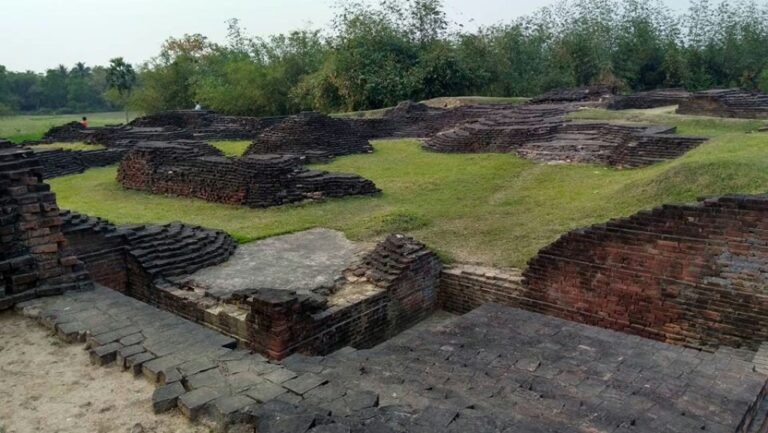
Ballal Dhipi The Archaeological Survey of India excavated the mound, during 1982-1988. The complex covers nearly 13,000 m² with a
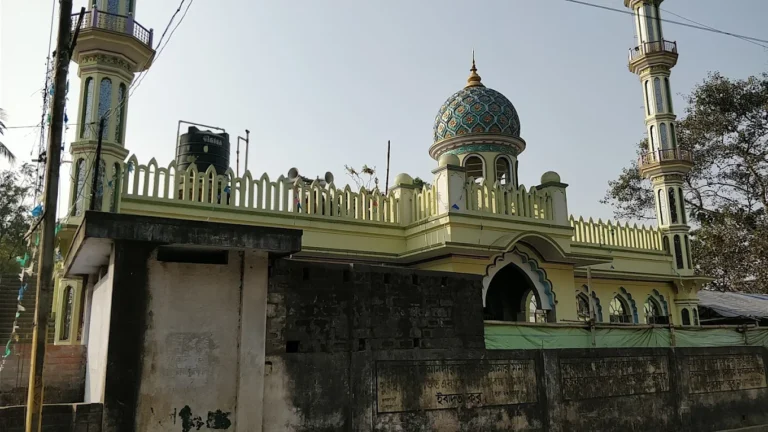
The 15th-century mosque at Bamanpukur was built during early Muslim settlement in the area and later collapsed after repeated river
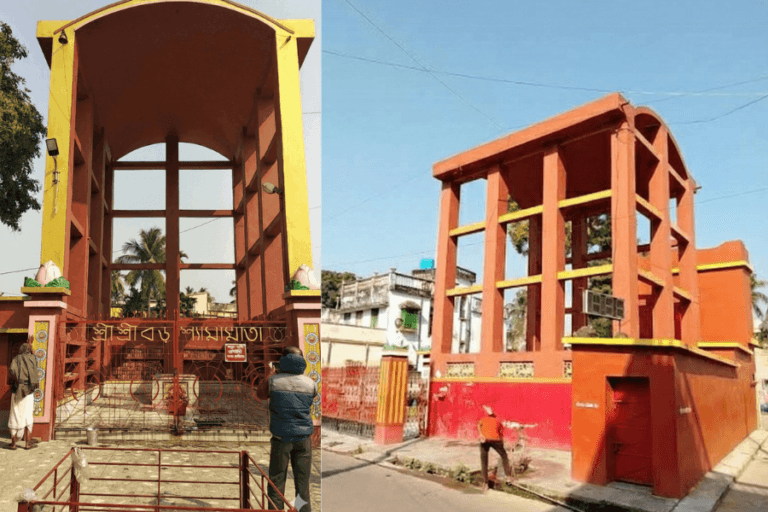
Boro Shyama Mata Temple is located in Teghoripara, Nabadwip and follows the mid-18th-century Shakta Rash tradition. The temple worships Goddess
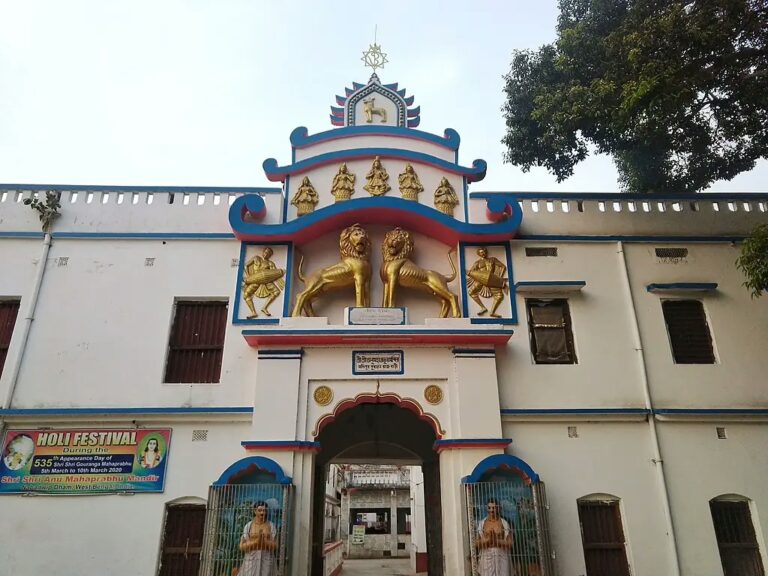
At the request of Maharaja Bhagya Chandra Singh, a piece of land of 16 Bighas on the bank of the
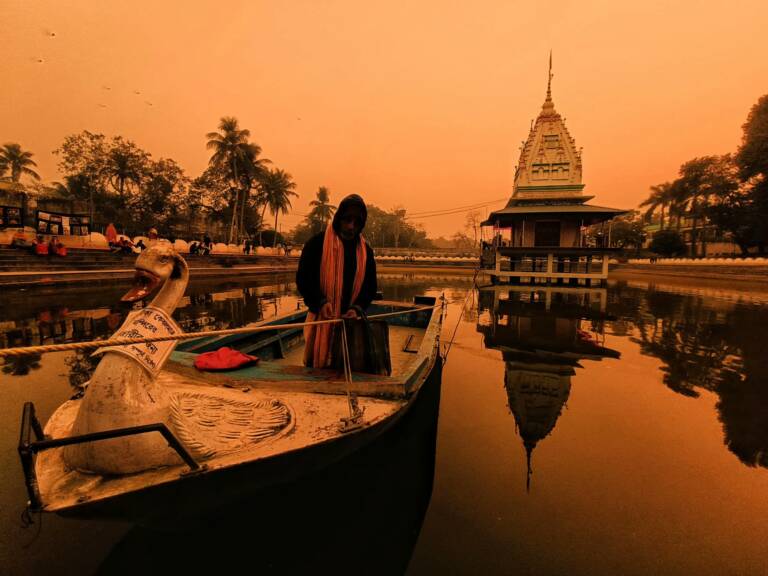
Sri Chaitanya Saraswat Math (Kolerdanga Mandir) is a Holy Temple, established in 1941, by His Divine Grace Om Vishnupad Sri
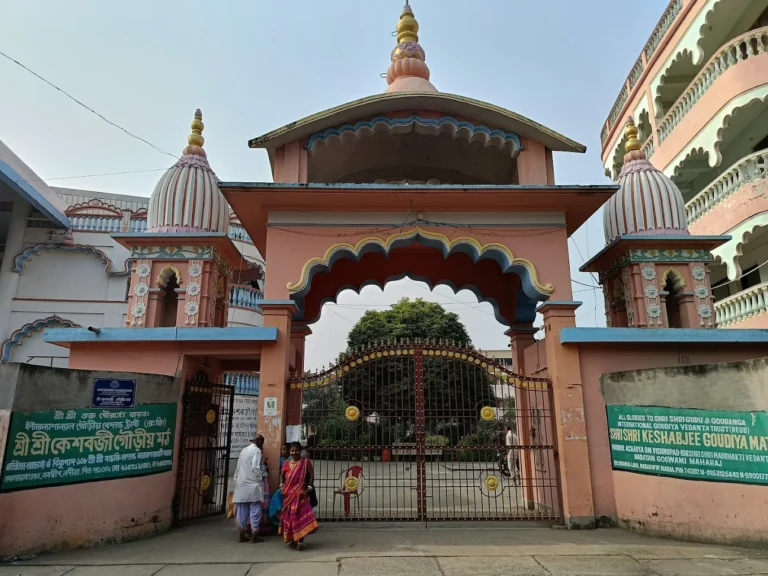
Located in Kolerdanga, Nabadwip. Founded by Bhaktivedānta Nārāyaṇa Mahārāja. Continues Gaudiya Math mission of 1920. Stands beside the Bhagirathi River.
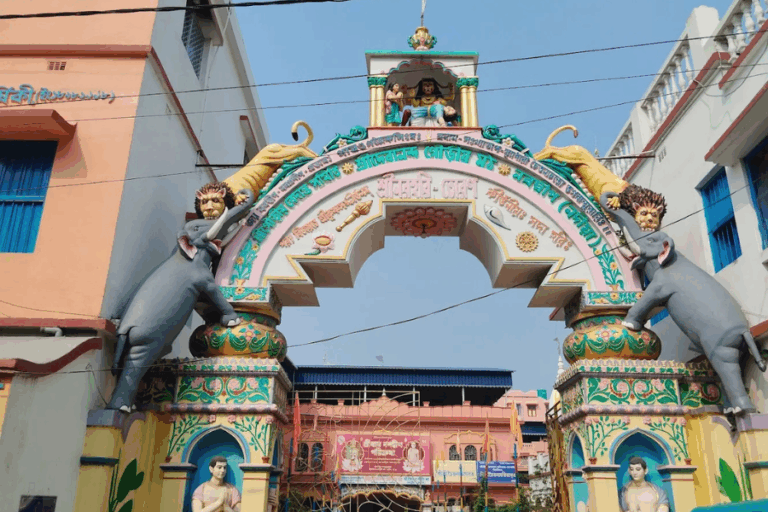
Sri Devananda Gaudiya Math Located at Teghori Para, Nabadwip, the Math is a major Gaudiya Vaishnava spiritual center. Serves as
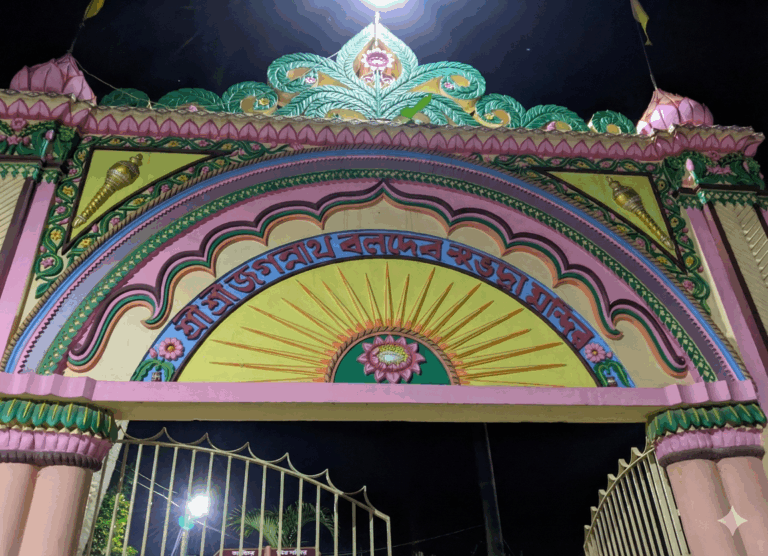
Jagannath, Baladev, and Subhadra deities worshipped here. Deities gifted to ISKCON in 1978 by the former pujari. Site linked to
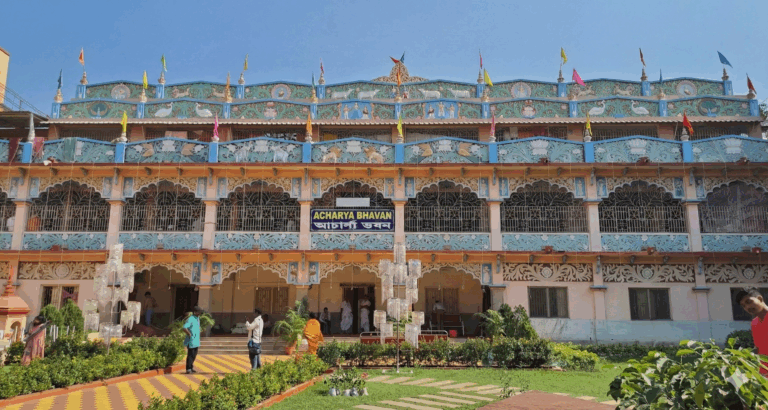
Adwaita Acharya’s Navadwip home site marks the place where he worshipped the saligrama-sila and prayed for Chaitanya’s appearance. The temple’s
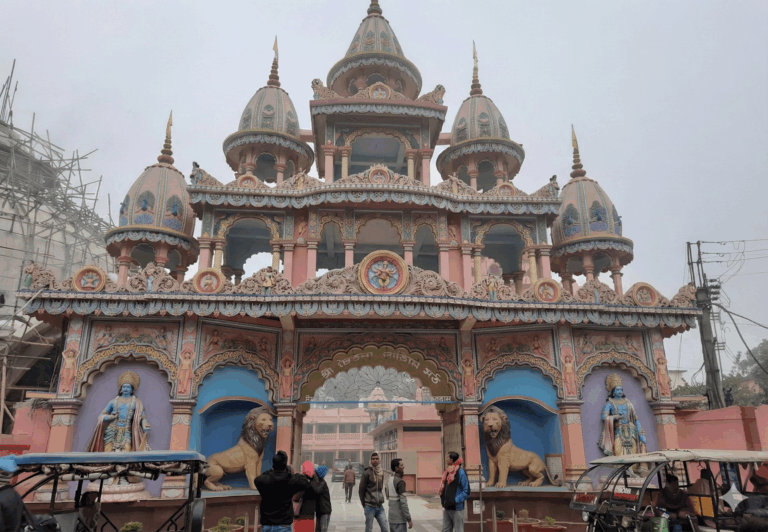
Started in 1918 at Chandrasekhara Acharya’s house site by Bhaktisiddhanta Sarasvati. Marked as the place where Chaitanya Mahaprabhu began his
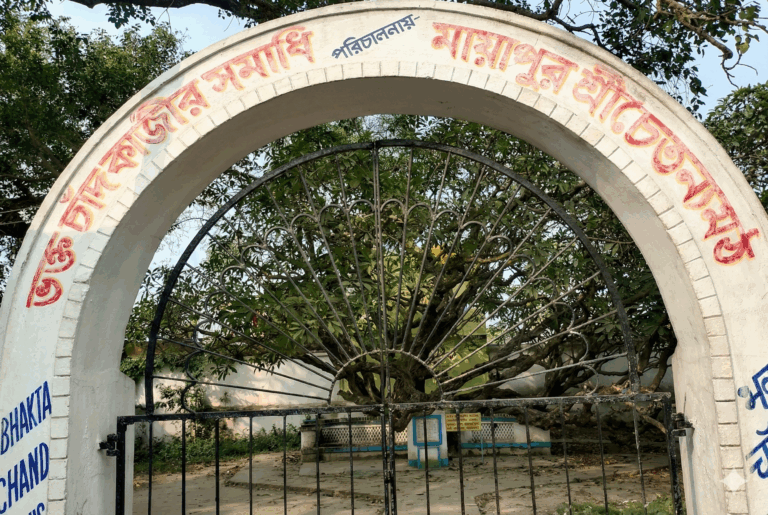
Chand Kazi stopped kirtan and broke a mridanga at Srivas Pandit’s house. Chaitanya led a large kirtan march to the
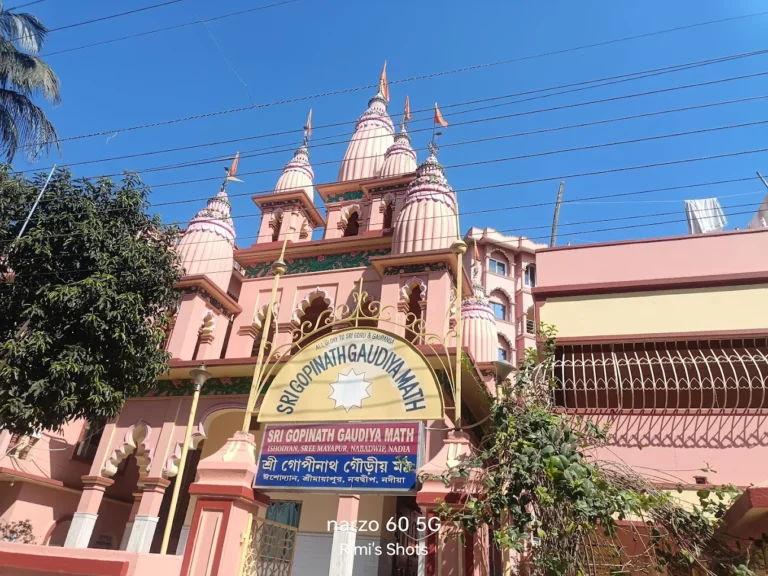
In 1987, disciples requested Bhakti Promode Puri Goswami to set up a center in Mayapur, which led to the formation
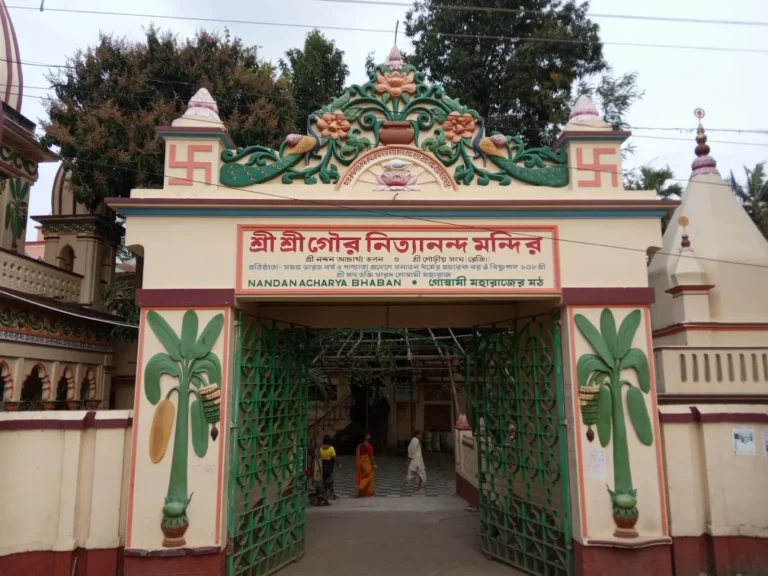
Gour- Nityananda Deities were worshipped by Vrindavan Das Thakur at this site. The location, once called the Naimiṣa of Gauda,
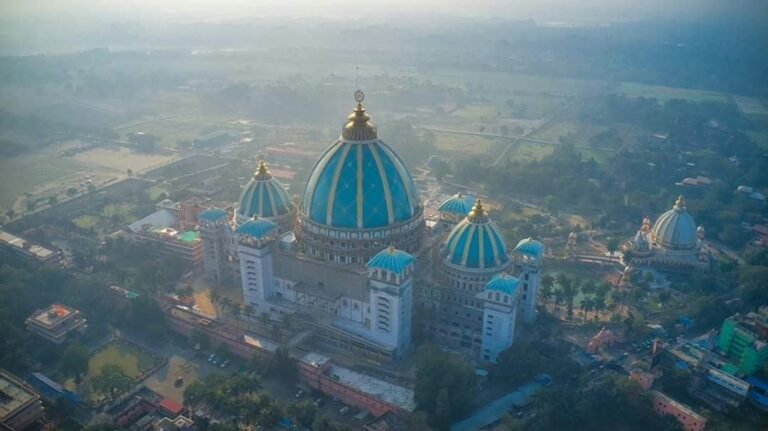
Arati Timing Mangala-arati: 4:30am (closes at 5:00am) Darsana-arati: 7:00am Srila Prabhupada Guru-puja: 7:30am Class on Srimad-Bhagavatam (English and Bengali separately):
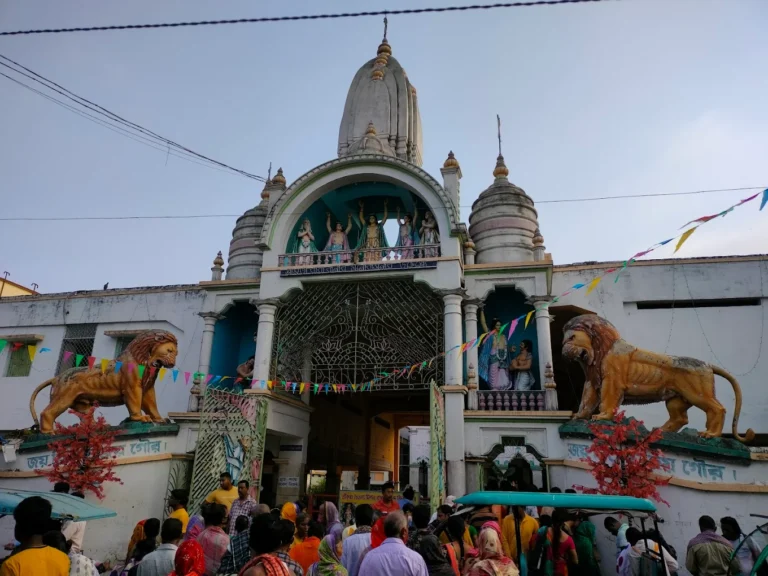
Linked to tale of Radha leaving Krishna and meeting again on full-moon night. Devotees visit on purnima to mark the

Built in 1852 after Rani Rashmoni purchased the Nabadwip zamindari. Served as the administrative center (Kachari Bari) for managing the
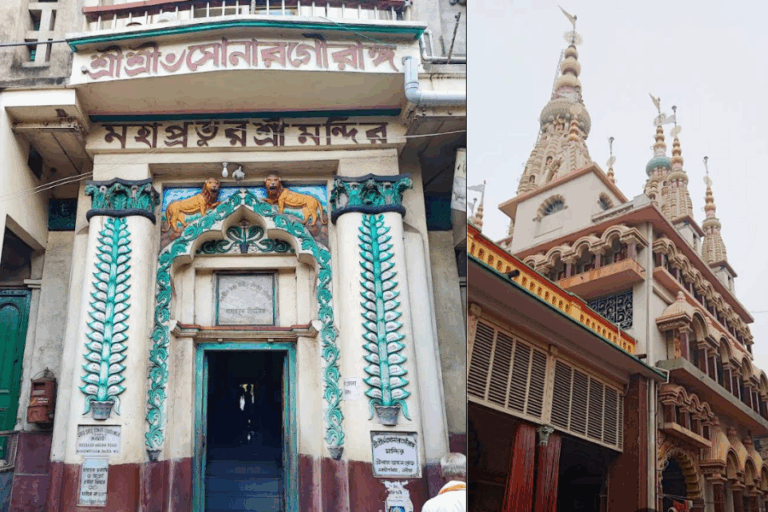
Built by Pratap Chandra Goswami to preserve the Golden Shrine and sacred footwear of Chaitanya Mahaprabhu. Dedicated to Lord Gouranga,
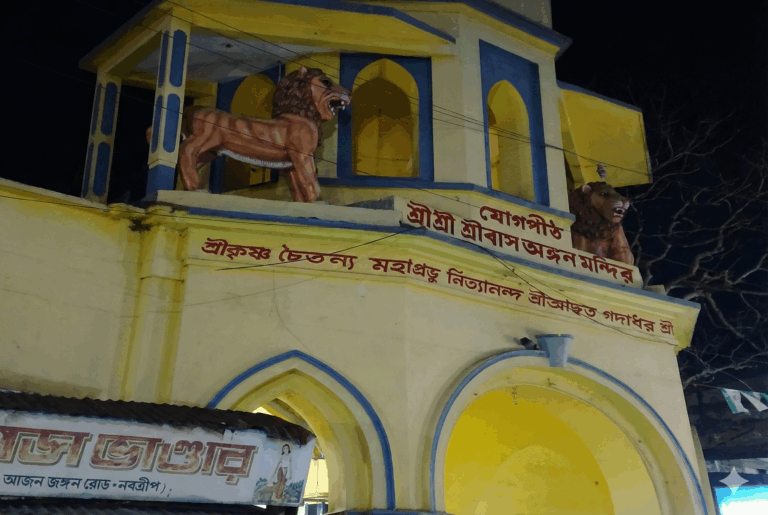
Home of Srivasa Thakur, close associate of Sri Chaitanya Mahaprabhu Main site of Mahaprabhu’s nightly sankirtan gatherings Known as “Khola-bhangadanga”

Built around the 18th century; exact records unknown. Named after the legend of a wealthy glass merchant and a prostitute.
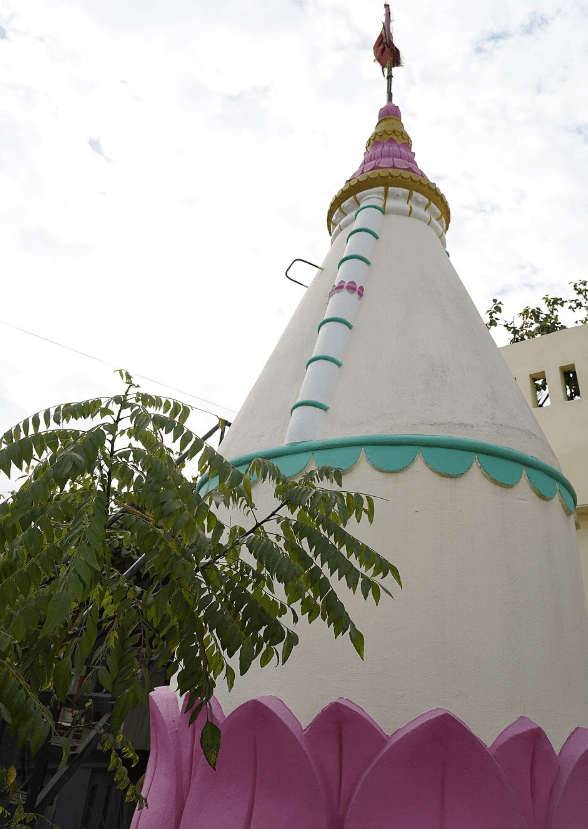
Spiritual ashram linked to the local saint Kangal Thakur. Known for simple devotional practice and a quiet atmosphere. Very different
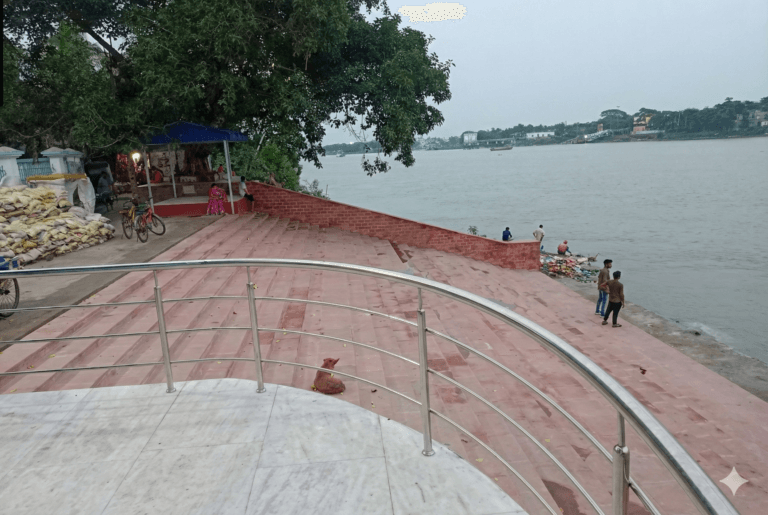
Located in Nabadwip, on the bank near Sribas Angan. Former home of Srivasa Pandita. Known as Kholabhanga-danga (place where mridanga
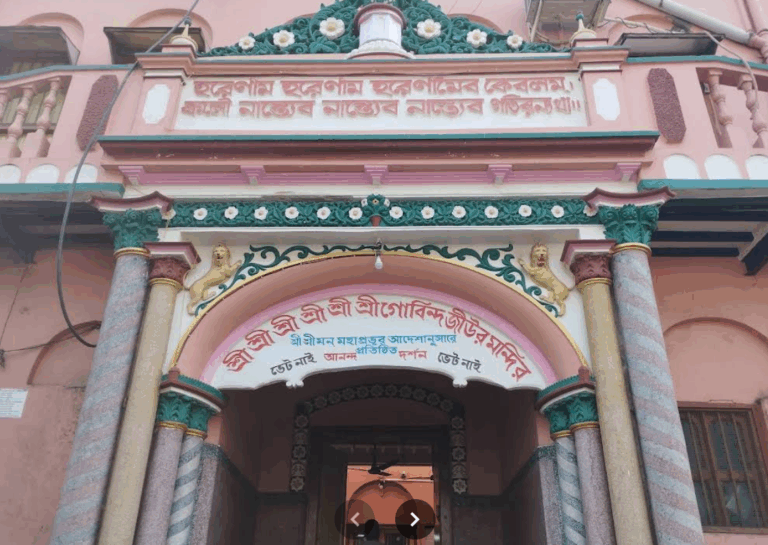
Sri Sri Gobinda Jiu Mandir is located near the Ganges River. It is a major Krishna temple in Nabadwip known
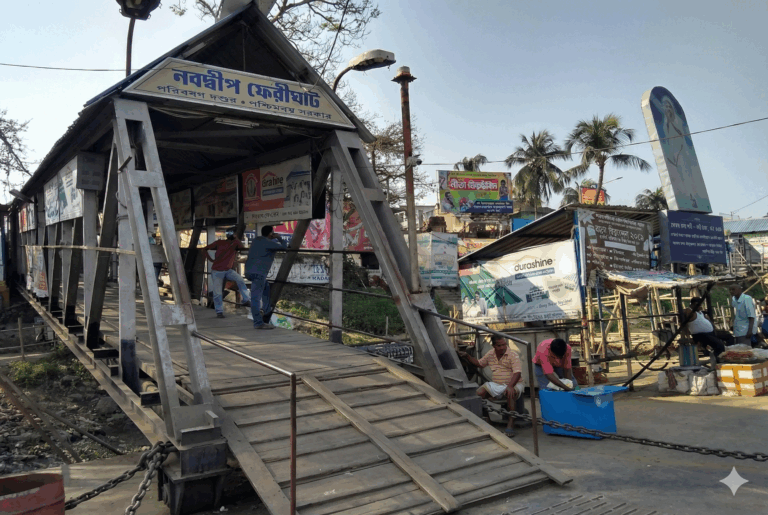
Nabadwip Ferry Ghat is on Baral Ghat Road, Prachin Mayapur. The ghat operates ferries across the Bhagirathi River. Offers clear

Ranir Ghat is the Nabadwip Ferry Ghat on the Bhagirathi River. It served as a transit route for pilgrims and
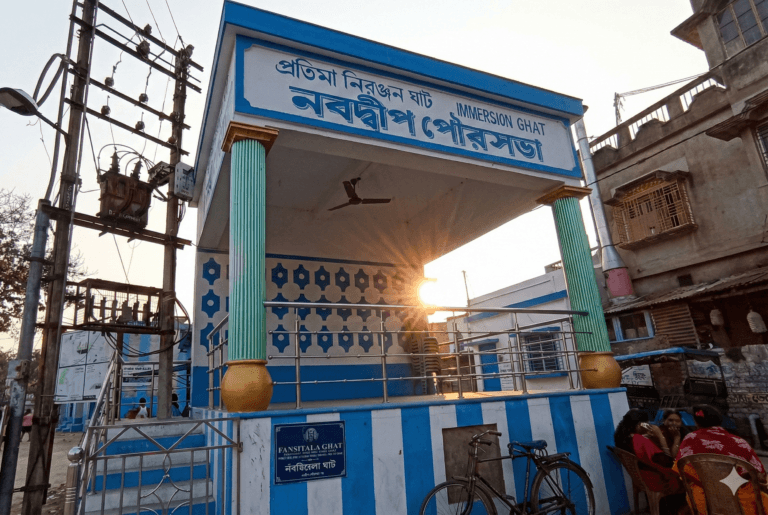
Nabadwip was the capital of the Sena dynasty. Used as a main river transport point in the medieval period. Became
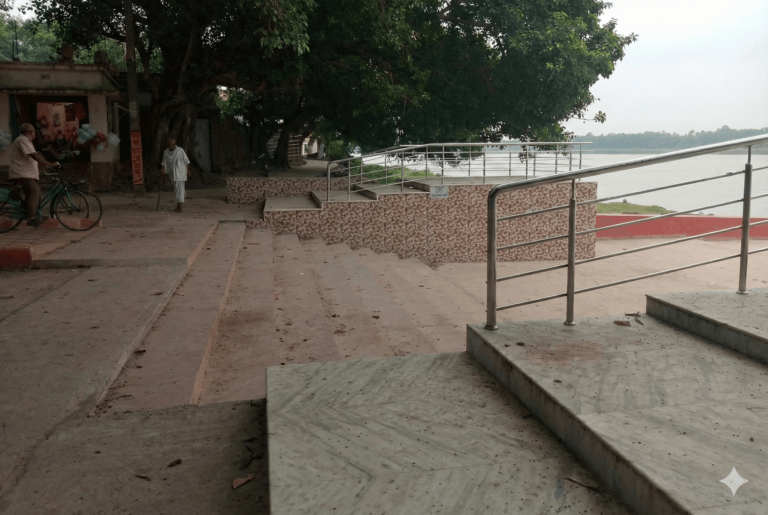
Manipur Ghat is a riverside ghat on the Bhagirathi River in Nabadwip. It is named after Manipuri pilgrims who visited
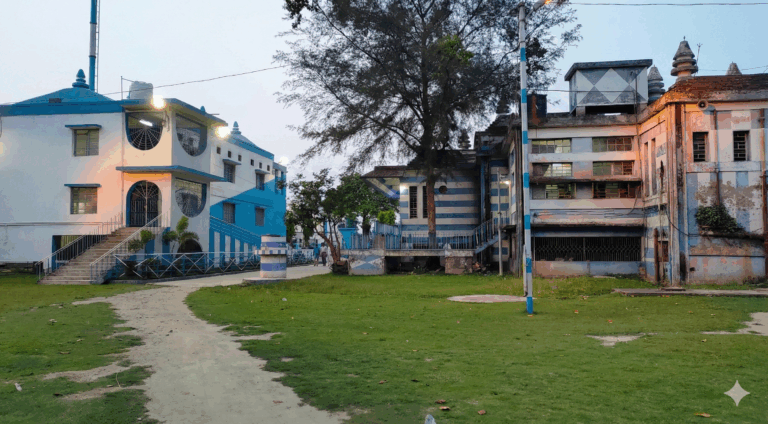
Cremation ground Located at Tegharipara, Poramatola Road, Nabadwip. Supports wood cremation and electric cremation. Provides urns and memorial-related services. There
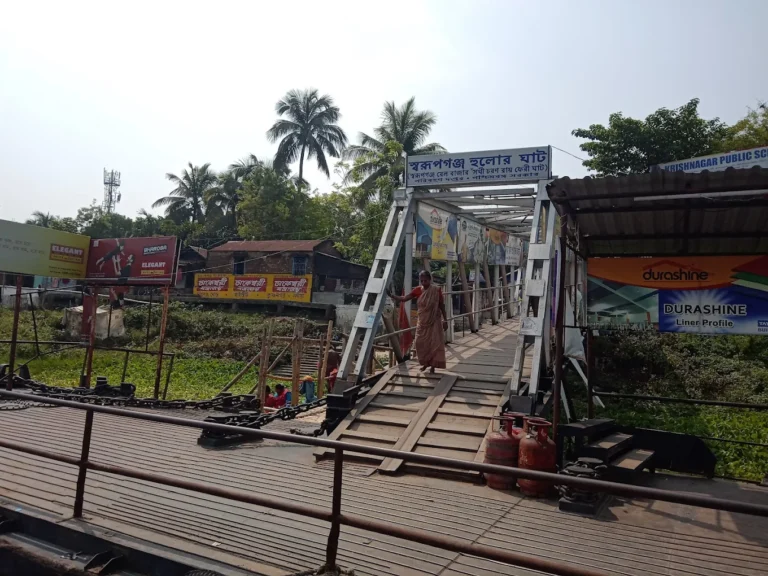
Hulor Ghat is a ferry point in Mayapur on the Ganges–Jalangi junction. It links Krishnanagar travelers to the ISKCON Mayapur